Buying a home or a piece of land is exciting, but it can also get a little confusing—especially when you’re not sure exactly where your property starts and ends. It’s easy to want to call a surveyor right away and get a property survey, but taking a bit of time to look into things first can save you headaches later. Doing a little homework helps you understand your property better and figure out how to avoid common mistakes before anything is finalized.
By checking a few basic records before you hire a surveyor, you’ll have a much clearer picture of the land. Then, when it’s time to get your property survey, you’ll know exactly what you need and can move forward with confidence.
Why You Should Check Records First
Not every property is the same. Some are straightforward, while others have little quirks that only show up when you look closely. Spending a few minutes to check things before getting a property survey can save a lot of stress later. It helps you see what you’re actually dealing with.
Going through local records first lets you catch small issues before they become big problems. It also makes talking to a surveyor easier, because you’ll already know the basics and can focus on the parts that really matter.
Start With the Property Deed
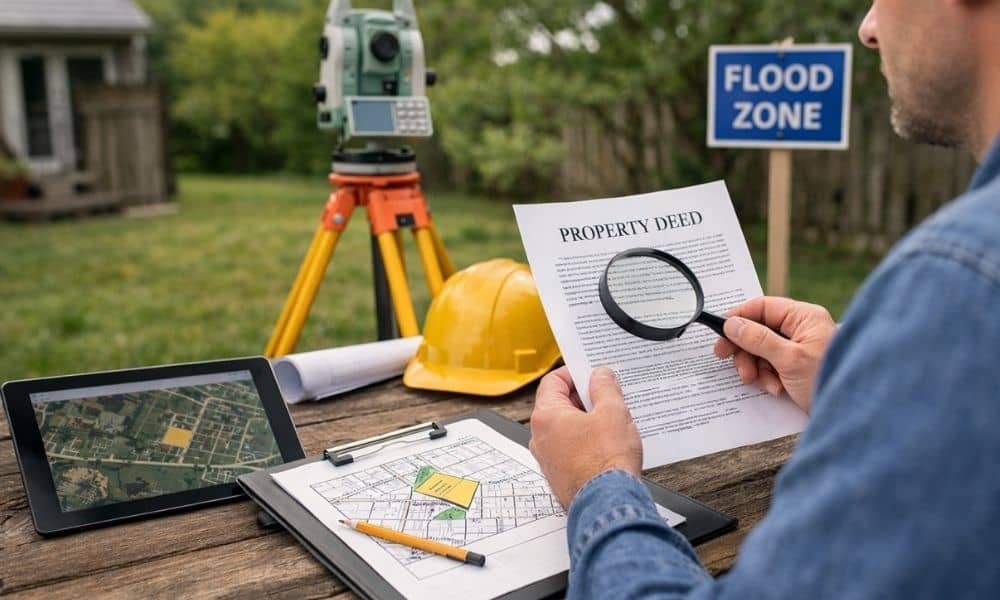
To begin, look at your property deed. This document shows who owns the land. More importantly, it includes the legal description.
Sometimes, the description lists a lot and block number. That usually means the property sits in a planned subdivision. Other times, the description uses directions and distances. That is called metes and bounds.
At first glance, this might look confusing. Still, you do not need to understand every detail. Instead, focus on whether the description looks simple or complex. If it seems unusual, that may mean your property survey will need more work.
Check the Plat Map for Your Lot
Next, find the plat map. This map shows how your lot fits into the neighborhood. It also shows lot lines, street access, and sometimes easements.
In St. Louis, you can often find plats through county or city records. Once you open the map, look at your lot shape. Is it square? Is it narrow? Does it sit on a corner?
These details matter. For example, odd-shaped lots may need more careful measuring. Also, if your lot touches an alley or shared drive, that could affect how the land gets used.
So even before ordering a property survey, you already learn a lot.
Use GIS Maps—But Be Careful
After that, check the local GIS map. This tool shows your parcel and nearby lots on a digital map. It is easy to use and gives a quick overview.
However, this is very important: GIS maps are not exact. They show general lines, not legal boundaries.
Even so, GIS still helps. For instance, you might notice that a fence does not match the map. Or you might see that your lot looks larger or smaller than expected.
Because of that, GIS works best as a guide. It helps you ask the right questions before you order a property survey.
Look for Floodplain Clues
In St. Louis, some areas sit near rivers or low ground. So it is smart to check floodplain maps.
You do not need to study every detail. Just look for basic signs. Is the property inside a flood zone? Does the area show past flooding?
If yes, that could affect your plans. It might also change the type of survey you need. For example, certain projects may require more elevation data.
So by checking early, you avoid surprises later.
Find Easements and Hidden Limits
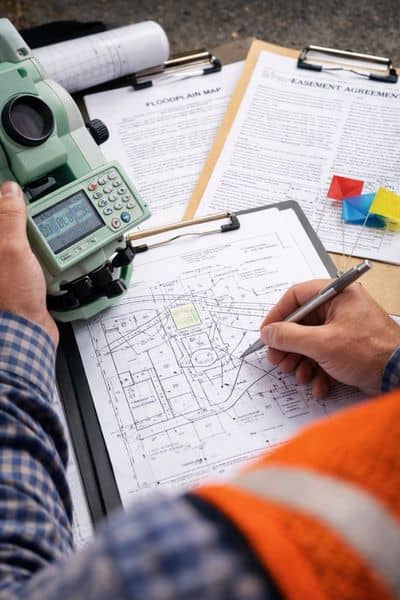
Now, look for easements. These are areas where others have rights to use part of your land. Common examples include utility lines or drainage paths.
You might find easements on the plat map or in recorded documents. At first, they may seem small. However, they can limit where you build or place structures.
For example, you might plan a fence or driveway. Then later, you learn it sits on an easement. That can cause delays or changes.
Because of that, it is better to spot these limits before ordering a property survey. Then your surveyor can focus on the right areas.
Watch for Red Flags
As you go through these records, pay attention to warning signs.
For example:
- The lot shape looks unusual
- The fence does not match the map
- The deed description seems unclear
- The property sits near a flood area
- You cannot find clear boundary markers
If you notice any of these, stop guessing. At that point, it is time to order a property survey.
Also, if you plan to build, sell, or buy, do not wait. A survey helps confirm everything before decisions get final.
How This Helps You Order the Right Property Survey
By now, you have a better understanding of your property. You know the layout. You have seen the records. You have spotted possible issues.
Because of that, you can speak with a surveyor with confidence.
Instead of saying, “I think I need a survey,” you can explain your situation. You can mention the lot type, the records you found, and any concerns.
As a result, the surveyor can guide you faster. The process becomes smoother. You also avoid paying for work you do not need.
A Smarter Way to Move Forward
In the end, a property survey remains one of the most important steps in owning land. It gives you clear, legal answers. It protects your investment.
However, the smartest move is not to rush. Instead, take a little time to check records first. This simple step helps you avoid mistakes. It also helps your survey go faster and more smoothly.
So before you order your next property survey, pause and review what is already available. Then move forward with confidence, knowing you made a well-informed choice.