When a city water line breaks, the damage often looks random. One block floods badly while the next stays mostly dry. A parking lot turns into an ice sheet, yet a nearby entrance stays clear. To most people, it feels like a chance. However, water does not move by luck. It follows elevation, slope, and surface paths every single time. Because of that, the shape of the ground decides where the worst problems appear. A topographic survey measures that shape in detail. With the right elevation data, you can often predict where water will run, collect, and freeze during an urban utility break. That insight helps property owners and developers reduce risk before a failure happens.
Why Urban Areas Spread Water Faster Than Expected
In open land, soil absorbs a lot of released water. Cities behave differently. Pavement, concrete, and compacted gravel block absorption. As a result, water moves across the surface instead of soaking in.
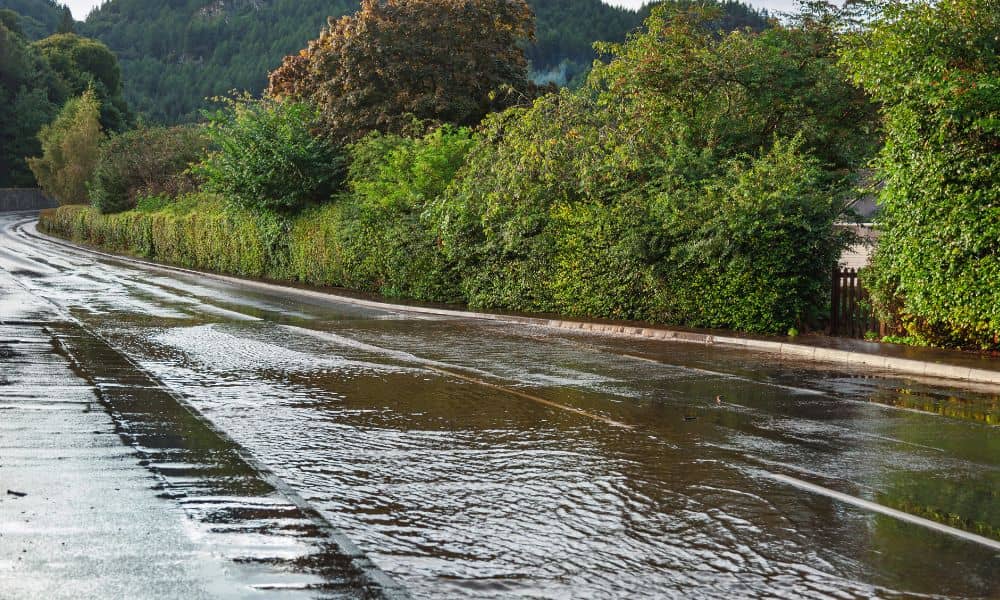
Moreover, urban features actually guide the flow. Curbs act like shallow channels. Gutters carry runoff along the street edge. Road crowns push water sideways. Parking lots send water toward their lowest corners. Therefore, when a pipe fails, the spread pattern depends more on surface grade than on distance from the break.
Even small elevation differences change the outcome. A few inches can decide whether water runs toward a doorway or toward a drain. That is why two nearby properties can see very different impacts from the same utility failure.
The Hidden Slopes That Control Where Water Goes
Most people never notice micro-slopes when they walk on a property. Everything looks flat at first glance. Still, the ground almost never sits perfectly level.
Subtle features shape water movement, such as gentle pavement crowns, shallow dips at driveway aprons, low points in intersections, and slight sags in parking rows. Alley grades and service lanes also redirect flow behind buildings where owners rarely look.
Individually, each change looks minor. Together, they form a flow network. Think of the surface like a tilted tray. Pour water anywhere, and it will follow the tilt lines every time. A topographic survey maps those tilt lines with measured elevations instead of guesswork.
What a Topographic Survey Shows That Basic Maps Do Not
Many owners turn to online maps when they worry about flooding. That seems helpful at first. However, most public elevation tools only show broad terrain shape. They miss the fine surface details that control urban runoff.
For example, they usually do not show curb heights, pavement edges, driveway lips, entrance thresholds, or parking lot depressions. Yet those features often decide where water collects first during a break.
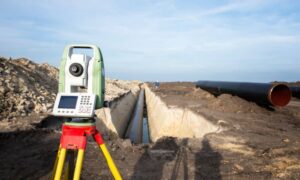
A topographic survey focuses on real, current ground conditions. Survey crews gather dense elevation shots across paved areas, walks, gutters, and access drives. Then they build a detailed surface model. Because of that precision, true low spots and true flow paths become clear instead of assumed.
How Flow Prediction Works From Survey Data
Once surveyors create the elevation surface, flow prediction becomes straightforward. Gravity handles most of the work. Engineers review the model and trace downhill directions across the site.
From there, likely ponding zones stand out. Overflow routes appear between high and low points. Cross-lot flow paths become visible. As a result, if a utility break happens uphill, the probable water path is already known.
This process does not require complex theory for the property owner to benefit. It simply turns the invisible shape of the ground into something you can see and plan around.
Real Property Situations People Recognize Immediately
This is not just technical talk. These patterns show up in everyday property problems.
For instance, a small retail center may have one slightly lower storefront. During a water main break, runoff follows the curb line and heads straight to that entrance. That doorway becomes slippery and unsafe while the others stay open.
At a warehouse, a shallow dock depression can collect released water first. Later, if temperatures drop, that same area freezes and slows deliveries. Managers often blame the weather alone, but the grade controls the location.
Apartment communities see similar issues. One corner of a parking area floods again and again while the rest drains normally. Residents assume poor maintenance. In reality, the surface slope directs the flow there.
Even homes on corner lots can receive redirected street runoff because the road crown tilts toward their driveway. Without elevation data, the pattern feels mysterious. With a topographic survey, it makes perfect sense.
Why Small Elevation Errors Lead to Big Costly Fixes
When owners do not understand surface elevation, they often fix the wrong area. They may replace drains, patch pavement, or add barriers where water is not truly entering. Those fixes cost money and fail to solve the root cause.
On the other hand, when the real low point is known, solutions become more targeted. A small regrade may redirect flow away from an entrance. A properly placed inlet can remove a ponding zone. A minor apron adjustment can stop recurring icing.
Therefore, accurate elevation data often reduces both repair scope and total cost.
When It Makes Sense to Order a Topographic Survey
Not every property needs detailed elevation mapping. Still, certain warning signs suggest strong value. Sites with repeated ponding, winter icing, or flooded access drives often sit on tricky grades. Properties near planned utility work also carry higher short-term risk.
Surface conditions also change over time. Resurfacing, patching, and curb repairs can quietly alter drainage paths. A current topographic survey captures today’s ground shape, not outdated assumptions. That matters when risk decisions depend on present conditions.
The Predictable Side of an Unexpected Failure
Urban utility breaks will always happen from time to time. Pipes age, joints fail, and pressure changes. No survey can stop every incident. However, water movement itself stays predictable because gravity never changes.
A topographic survey reveals how the ground will guide that movement. It shows where water will likely run, where it will collect, and where it may create danger. That knowledge turns a sudden event into a planned scenario.
In the end, the break may be unexpected, but the flow path is not. The ground already sets the route — and a topographic survey lets you see it before the water arrives.