You open a property map online. The lines look sharp. The lot shape makes sense. You zoom in, and everything feels clear.
So you trust it.
That’s what most people do in St. Louis. It’s quick, and it feels official. County maps, city records, and real estate websites all show the same thing. You see your house sitting inside a neat outline, and it feels like that outline must be correct.
But that confidence comes from how the map looks, not from how accurate it is.
These maps are made to help people find parcels and view general layouts. They are not built to show exact legal boundaries. Still, many homeowners treat them that way without realizing it.
That’s where small mistakes begin.
What Online Property Maps Actually Show
Online maps give you a visual guide. They help you see where a property sits and how it relates to nearby lots.
They pull data from tax records, old plats, and public files. That data then gets layered onto a digital map. The result looks clean and easy to read.
So it feels reliable.
But these maps don’t measure your land in real time. They don’t go out and confirm where your property lines sit on the ground. They don’t account for every change that may have happened over the years.
Even a small shift in the map can mean several feet in real life. That difference may not look like much on a screen. On your property, it can change everything.
Why These Maps Can Be Off by More Than You Think
A lot of St. Louis neighborhoods have been around for a long time. Over the years, properties may have been split, adjusted, or recorded in different ways.
Some records started as hand-drawn plats. Others were digitized much later. Each step adds a chance for small errors to slip in.
Then those records get placed on a digital map.
That’s how you end up with lines that look exact but don’t match the ground.
Zoom in, and you might notice the shape shift slightly. Zoom out, and it looks fine again. That alone shows how unstable the data can be.
And yet, people still use those lines to plan real projects.
What You Don’t See on a Property Map
The biggest issue is not what maps show. It’s what they leave out.
They don’t show the physical markers that define your property. Those markers could be pins in the ground or old monuments set years ago.
They don’t show easements that may run across your land. A utility line or drainage path might sit right where you plan to build.
They don’t show if a structure crosses into your space or if your space crosses into someone else’s.
So even if the map looks complete, it’s missing key details that affect real decisions.
That gap creates risk.
How a Boundary Survey Changes the Picture
A boundary survey works in a very different way.
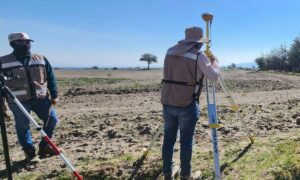
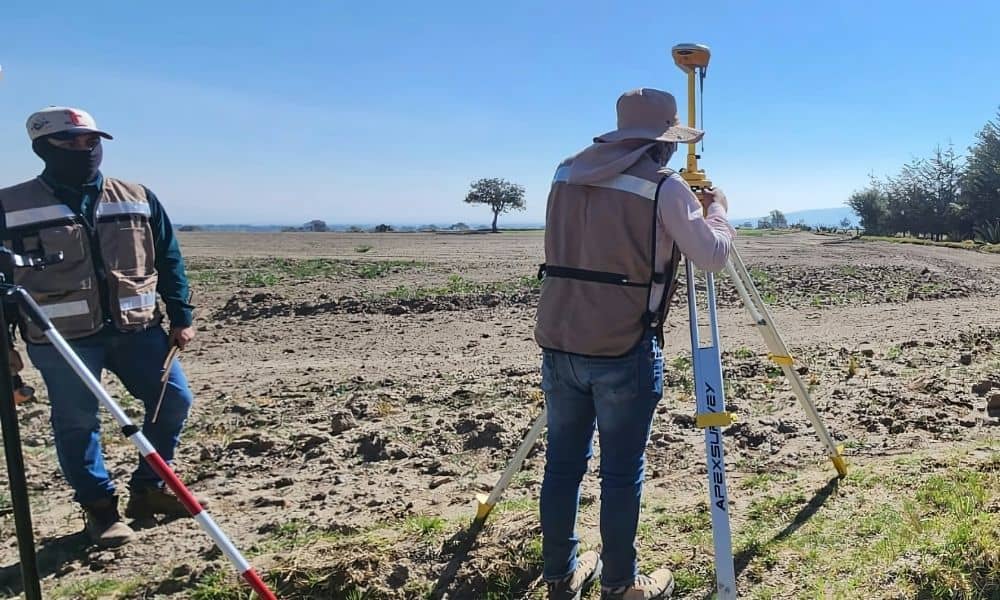
Instead of relying on a digital overlay, a licensed surveyor studies the legal records tied to your property. Then they go out to the site and measure it using precise tools.
They compare what’s written in the records with what exists on the ground.
After that, they mark the actual corners of your property. You can see them. You can walk to them. You know where your lot begins and ends.
That level of clarity doesn’t come from a map.
It comes from real measurement and verification.
Where People Get Caught Off Guard
This issue shows up in simple situations.
Someone plans a small addition and checks the map first. It looks like there’s enough space. Work begins, and then something feels off.
Another buyer reviews a property online and assumes the lot size matches the outline. Later, they find out part of that space isn’t usable the way they thought.
Even basic layout plans can run into trouble when the map does not match reality.
The mistake is not using the map. The mistake is trusting it too much.
A Better Way to Use Property Maps
Property maps still have a place. They’re useful when you’re just getting a feel for your lot. You can see the general shape, how it lines up with nearby properties, and start thinking through your plans.
That works at the start. But once your plans depend on exact lines, the map can only take you so far.
That’s usually the point where people stop relying on the map and get an accurate boundary survey so they know exactly where things sit.
From there, everything feels clearer. You’re not guessing anymore. You know what you’re working with.
Why This Matters More in St. Louis
St. Louis has many older areas with long property histories. That history adds layers to the records tied to each lot.
Over time, small changes can build up. Records may not align perfectly. Data may not reflect what exists today.
So the chance of mismatch grows.
In newer areas, things tend to be more consistent. In older parts of the city, the gap between map and reality can be wider.
That makes it even more important to confirm before making decisions tied to your property.
What It All Comes Down To
Online property maps make things look simple. They give you a quick view and help you get started. But they don’t define your property.
If your plans depend on where your lot begins and ends, that’s usually when people take a step back and verify your property lines before moving forward.
You need more than a visual guide. You need real points on the ground that you can trust.
A boundary survey gives you that clarity.
And when decisions involve your property, clarity matters more than convenience.