Buying a historic redevelopment property can be a smart investment. But before you think about tax credits or renovation plans, one step matters most: ordering an ALTA survey. This article explains what that survey does, why it is so important for older buildings, and why getting it done before you close on the property is the right call.
Missouri Is Making It Easier to Restore Old Buildings
Missouri has been a leader in historic preservation for a long time. In August 2024, the state passed H.B. 2062, raising the state Historic Tax Credit from 25% to 35% for properties outside Kansas City and St. Louis. In May 2026, H.B. 3080 kept those improvements in place.
Stacked on top of the federal 20% Historic Tax Credit, that adds up to 55% in combined credits toward the cost of fixing up a qualifying historic building outside the two major cities.
The National Park Service reported that developers across the country put $8.64 billion into federal Historic Tax Credit projects in fiscal year 2025, the second-highest annual total ever recorded. That level of investment is pulling serious attention toward buildings that have sat empty for years.
The need to know exactly what you are buying before you sign anything has never been more important.
Old Buildings Come With Hidden Problems
Think about a building put up in the 1920s. In the hundred years since, it has had many owners, additions, informal agreements, and legal disputes attached to it. Each one can leave something behind that still affects the property today.
A title search looks at recorded documents like deeds and official easements. But it cannot tell you whether the actual building and land match what those documents say. That is where an ALTA/NSPS Land Title Survey comes in.
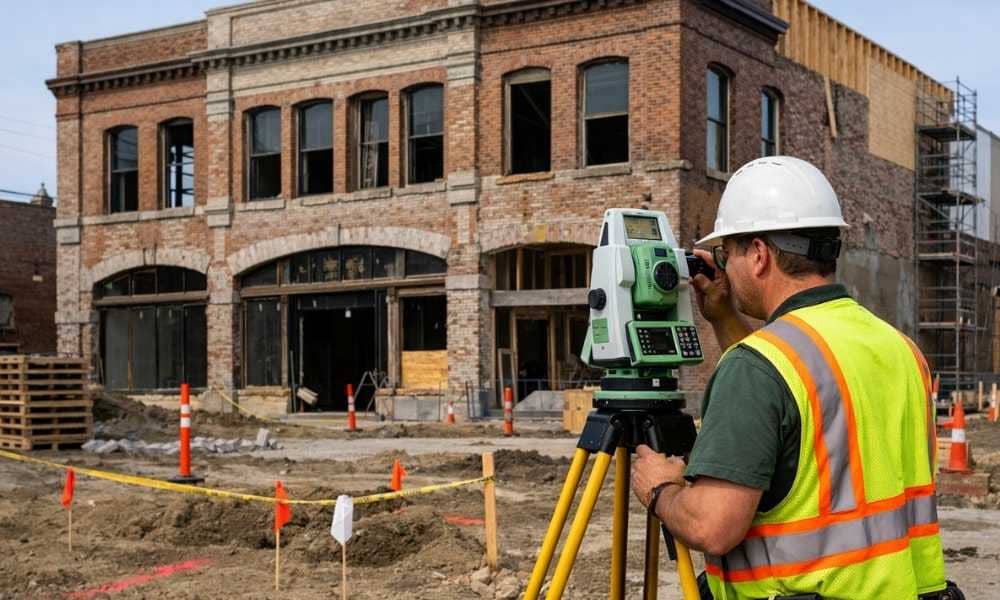
An ALTA survey compares what the title documents say against what is actually on the ground. On older properties, surveyors often turn up problems no one knew about. Some of the most common ones include:
- Parts of the building that cross onto a neighbor’s land. Old buildings were often built using rough estimates of where the property line was. Walls or foundations can end up a few inches or a few feet onto the next parcel.
- Utility lines with no written record. Gas pipes, sewer lines, and electrical conduits were often laid under handshake deals that were never written down. Those agreements can still be legally binding today.
- Rules tied to being in a historic district. Some older properties sit in areas where strict rules apply to what you can change about the building’s look or layout. These rules do not always show up clearly until you compare the title documents with the survey.
- Shared driveways or alley access that was never formally recorded. In older city blocks, it is common for people to have used the same alley for decades without any legal paperwork backing that up.
Finding these issues before you buy gives you time to deal with them. Finding them after you buy means paying to fix them on your own.
A Survey Helps Protect Your Tax Credit Application
To get Missouri’s Historic Tax Credit, your project has to be reviewed and approved by the State Historic Preservation Office, known as SHPO. That office checks whether your plans meet federal standards for restoring historic buildings. To do that review, they need accurate information about the building’s size, layout, and boundaries.
An ALTA survey gives you that verified data. Without it, your architect and tax credit consultant are making plans based on guesses instead of facts. If a survey problem shows up in the middle of the application process, such as an easement running right through where you planned to build an addition, the plans may have to be redrawn from scratch.
That takes time. And time is something you need to protect.
H.B. 2062 gave developers 24 months to start rehabilitation work after receiving tax credit approval, replacing the old 9-month window. But sorting out a title problem or an easement dispute can easily eat up several of those months. Getting the survey done before closing keeps your timeline intact.
One more thing worth knowing: to qualify for the credit, your rehab costs must be at least 50% of what you paid for the property. You are putting in serious money before any credits arrive. Getting a clear picture of what you are buying before you close is not extra caution. It is just good planning.
Banks and Title Companies Will Ask for This Survey
Most historic redevelopment projects use more than one source of money. Construction loans, tax credit equity, and other financing are often part of the same deal. Every lender involved will ask for an ALTA/NSPS Land Title Survey meeting the 2021 national standards, certified to the buyer, the lender, and the title company at the same time.
Title insurance companies are especially careful with older properties. The longer a building’s history, the more likely it is to have what are called Schedule B exceptions. These are issues that the title insurance policy will not cover. The title company uses the ALTA survey to figure out which risks it can insure and which ones need to be fixed before the deal can close.
When you order your survey for a historic redevelopment site, include the right Table A items upfront:
- Item 6 checks zoning rules and setbacks to confirm your planned use is allowed.
- Item 11 maps underground utility lines that may not show up in recorded documents.
- Item 13 lists neighboring property owners, useful if a boundary issue needs to be resolved.
- Item 18 confirms that legal access to the property is properly recorded, not just assumed.
Adding these at the start saves you from ordering extra work later.