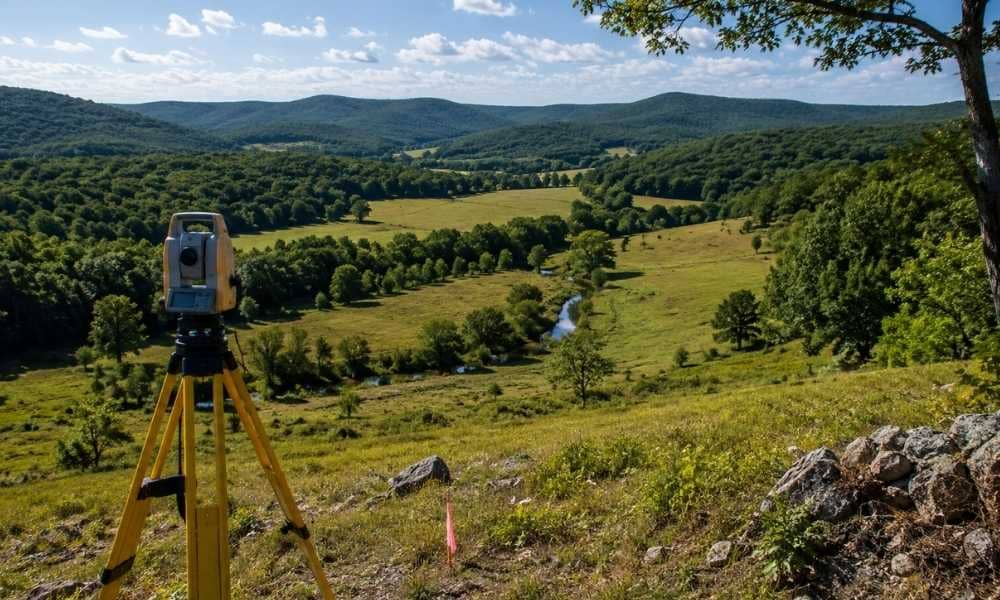
You found the perfect land for your project. Sixty acres. Wooded hills. A creek runs through it. Everything looks great until you ask: “How much will a land survey cost?”
The answer is not simple. Land survey cost for rural land works differently than for small houses. A five-acre suburban lot might cost $300 to $500. But a 60-acre property in the Ozarks with thick woods, hills, and old records? That could cost much more.
This article explains what makes surveying large properties expensive. When you understand these factors, you can budget better and avoid surprises.
Why Large Acreage Changes the Land Survey Cost
Size does not determine land survey cost alone. A 100-acre flat property takes less work than a 40-acre wooded property with odd shapes.
What really matters is complexity. Surveyors charge based on the work needed, not just acres.
These things change the cost:
- Parcel shape: Odd-shaped properties need more corners marked and checked.
- Terrain: Steep hills and thick brush make work slower and harder.
- Old markers: Missing or buried corner markers take time to find.
- Trees and structures: They hide property lines and markers.
- Office work: Large properties need more research before fieldwork starts.
A square 80-acre lot might take one day. An 80-acre lot with ravines and wooded areas might take three days.
Old Property Records Can Add More Survey Work
Old rural properties have old deeds. These deeds tell stories. But they also make land survey cost higher.
Old deeds mention places that don’t exist anymore. You might read “north from the big oak tree” or “near the old barn.” That barn burned years ago. The tree was cut down long ago.
Why this matters for your survey:
Surveyors must search through old documents to understand what the descriptions meant. They look at old maps, check courthouse records, and read multiple deeds. This takes time.
One old deed might mention a creek that moved. Another might use old measurement systems. This makes the work harder but not impossible.
Many rural properties were subdivided many times over 150 years. Each time it was split, new descriptions were written. Checking all these descriptions takes more time and increases land survey cost.
Natural Features That Slow Rural Survey Projects
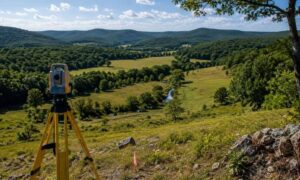
The Ozarks have hills. Most large rural Missouri properties have hills too.
Dense woods, creeks, ravines, and steep hillsides are beautiful. But they cost more to survey. Here’s why:
Terrain problems:
- Surveyors cannot walk straight through thick brush and woods. They must go around obstacles.
- Creeks and water need special measuring methods. Surveyors cannot cross during floods.
- Thick plants hide old corner markers. You cannot see markers on nearby properties.
- Seasons matter. Winter looks different from summer when plants grow thick.
- Limited sight lines mean surveyors must work in stages instead of one trip.
A flat 20-acre property might take one surveyor one day. A 20-acre property with woods and ravines might take two surveyors two days.
Your land survey cost reflects these real challenges.
Why Neighboring Property History Can Affect Survey Time
Your property is not alone. Nearby properties affect how much work your survey takes.
Neighboring properties with old surveys create extra checking. If a neighbor’s property was surveyed 40 years ago, your surveyor may need to compare old markers with today’s ground. Old surveys used less precise methods.
Neighbor complications:
- Missing markers on nearby land make your boundary lines harder to confirm.
- Multiple owners on nearby properties create confusing record gaps.
- Two deeds claiming the same land need careful research to fix.
- Different survey dates create differences that must be resolved.
Your surveyor works with neighbors, checks their documents, and contacts their surveyors. This coordination adds to land survey cost but prevents boundary disputes later.
Planning Ahead Can Help Control Land Survey Cost
You cannot change the terrain or hills. But you can reduce wasted time.
Before hiring a surveyor, gather:
- Your original deed and any past surveys
- Easement documents for utilities, roads, and mineral rights
- Gate access information and seasonal restrictions
- Location of any known corner markers
- County plat maps
- Past survey notes from neighbors
Surveyors like this preparation. It cuts research time. They can plan their crew and equipment better. Better planning means faster fieldwork.
Mark any visible corners you find. This helps the surveyor work faster on difficult areas.
Provide gate information and ask about seasonal access issues. Some land floods or snows in certain months.
These steps don’t lower land survey cost, but they prevent delays that could raise it.