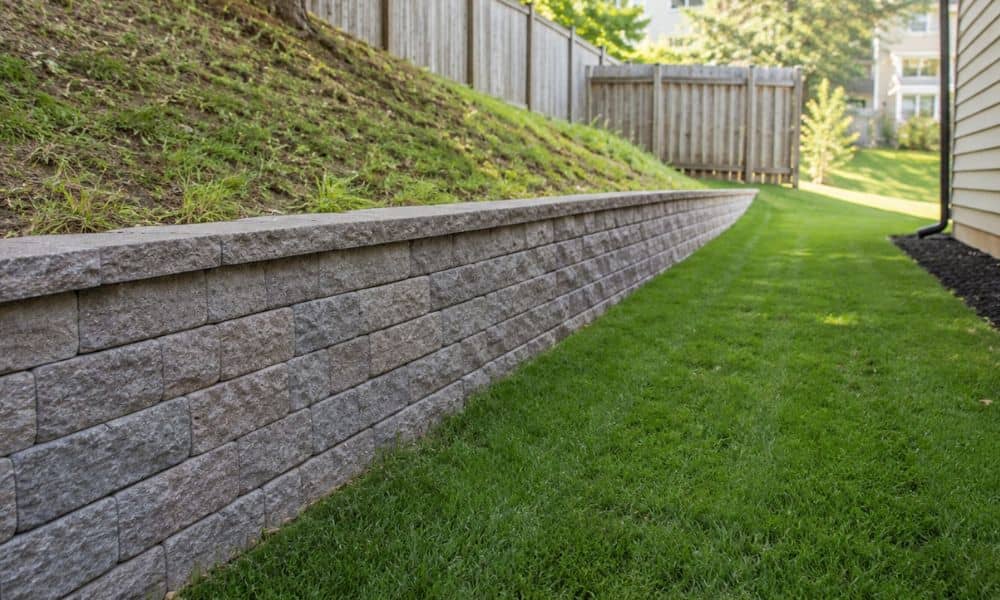
Your old retaining wall is leaning, cracking or losing soil behind it, and you’re ready to pull it out and build a new one. Before that work starts, find property lines so you know where the new wall can sit. The spot where the old wall stands may not match where your legal line runs. In Missouri, plenty of these walls went up decades ago, sometimes by a past owner or a neighbor, and no one recorded if they sat on the true line. Sorting that out first keeps the new wall in the clear.
Why an Old Retaining Wall Can Create a Boundary Question
A retaining wall holds back soil and manages a change in grade. Where it sits today tells you where someone once chose to build. It doesn’t tell you where your property line falls.
Old walls end up in all sorts of places. Some were built a foot or two inside a lot to stay safe. Some were set right along what a past owner believed was the line. Others cross the line without anyone noticing, because the person who built it eyeballed the spot instead of working from a survey.
The wall’s position is a physical fact. The property line is a legal one, tied to your recorded deed and the plat for your parcel. Those two things can line up, but they don’t have to. Treating the face of an old wall as your boundary is a guess, and with a replacement wall that guess can follow you into the new build.
Start With the Property Records, Not the Wall Itself
Before anyone measures the yard, look at what’s already on paper. Your deed holds the legal description of the parcel. If your lot came from a subdivision, the recorded plat shows its shape and dimensions. A prior survey, if one exists, may already show corners and how the old wall relates to them.
Missouri’s standards for property boundary surveys tell licensed surveyors to start from the record title description and gather records like adjoining deeds, subdivision plats and earlier surveys before going into the field. You can do a lighter version of that same first step. Pull the deed, check for a plat and dig up any survey from a past sale or project.
There’s a catch. A deed or plat describes the boundary in words and numbers. It rarely shows you the exact spot on the ground. A distance and direction on paper still has to be measured out from a known starting point in your yard. So records give you strong clues about your line, but they usually can’t stand in for locating it where the wall is.
What Changes When the Wall Sits Near the Boundary
If the old wall sits well inside your lot, a replacement in the same footprint carries little boundary risk. The closer the wall is to the line, the more the details matter.
Replacing a retaining wall is rarely a clean swap. To pull the old one out and set a new one, a crew often digs behind and below the old face. A new wall needs a base or footing that can run wider than the wall you see, and many designs hold soil back with reinforcement and backfill that reach farther into the slope. So the new structure can take up more room than the old one did, even when the visible face lands in the same place.
That matters near a line. A wall that looked fine for years might, once rebuilt, push its base or its backfill toward the neighbor’s parcel. And if you’re thinking about moving the wall at all, to change the grade or gain a little yard, you need to know which direction is yours to use. None of that is safe to judge from the old footprint alone.
When Records Aren’t Enough to Locate the Line
Sometimes the deed and plat leave you sure of the line. Often they don’t, especially on older lots where the paper trail is thin or the yard has changed. That’s when a professional boundary determination earns its place.
It’s tempting to trust what you can see. An old iron pin, a fence, a row of shrubs, the wall itself, any of these can feel like the boundary. Physical features can be evidence, but they aren’t automatically the line. Pins get moved or buried. Fences get replaced a few inches off. A wall built by eye proves only that someone built there once.
A licensed land surveyor ties all of it together. They work from your record title description, search for the real boundary monuments at the controlling corners, weigh the physical evidence and mark where your line actually falls. The wall stops being your reference point. The surveyed line becomes it.
Confirm the Boundary Before Finalizing the Wall Layout
Once you know where the line is, connect that to the wall you’re about to build. Decide where the new face will sit, and check that the base, the footing and any backfill stay on your side or on a line you and your neighbor have agreed to.
Do this before excavation, not after. Moving a poured or stacked wall is slow and expensive. Sorting out the boundary while the plan is still on paper costs far less.
Clear line information also keeps everyone working from the same picture. You, your contractor and the neighbor next door can look at the same corners and the same marked line instead of arguing over an old wall. That shared starting point heads off the kind of surprise that stalls a job halfway through.
The order is simple for homeowners. Find property lines first. Then finalize where the replacement retaining wall goes. A wall built to a known line is one you won’t have to worry about later.